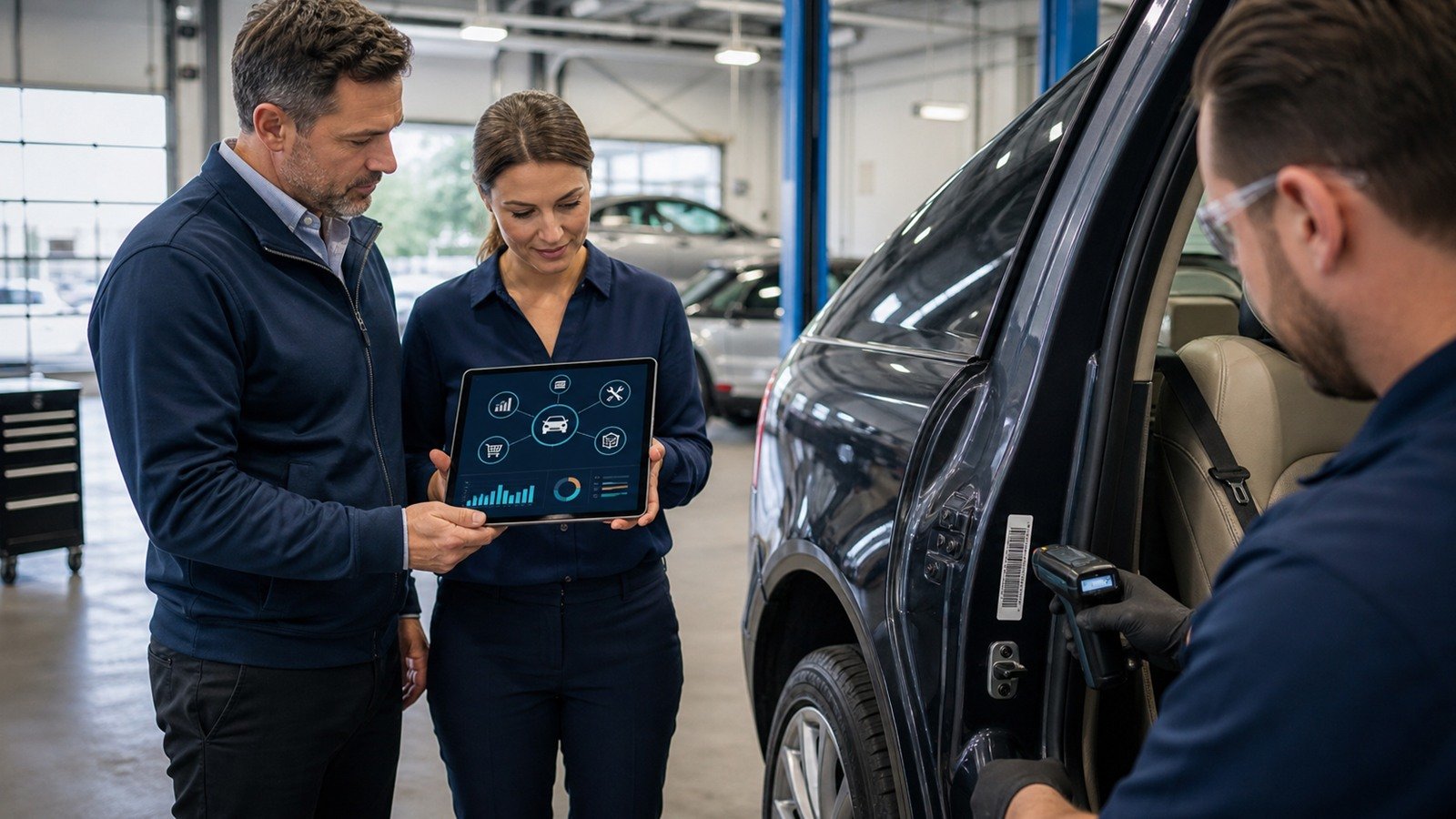
There is a version of the dealership software story that gets told at every conference: dealers have too many vendors, the market will consolidate, one platform will win, buy from the winner early.
I build software for dealerships and I think that story is mostly wrong — or rather, it's right about the problem and wrong about the fix.
The problem is real
The symptoms are well documented. Dealers drop 30 to 40% of inbound calls and mishandle 43% of leads on average. Two out of three customers never come back after the purchase. None of that is a software shortage. The average store is paying for more tools than it can name.
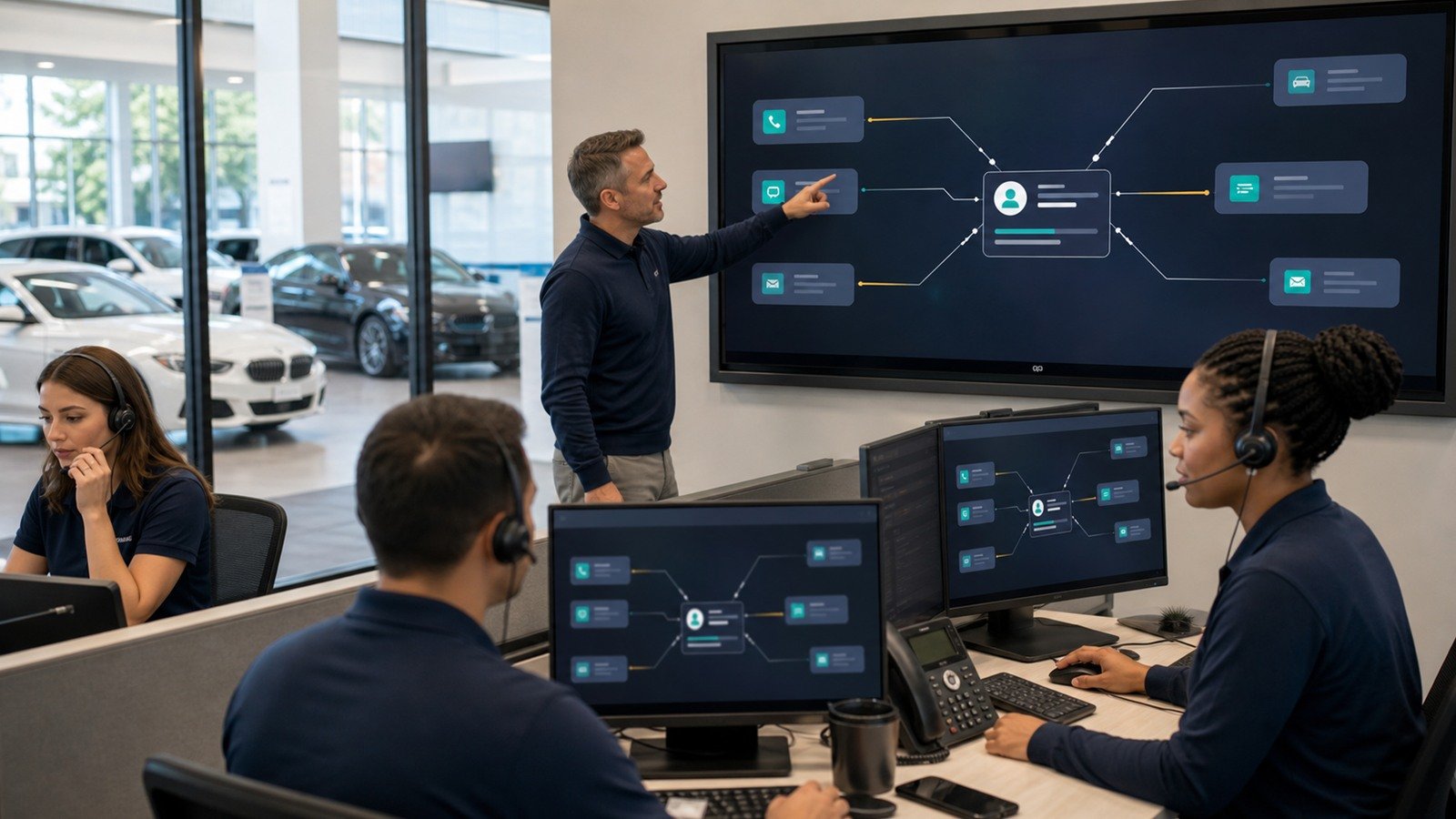
What it is, precisely, is a shared-record problem. The call that got dropped was from a customer whose vehicle is 200 days from lease end, whose last three service visits are in the DMS, and who opened your email on Tuesday. Every one of those facts exists. None of them was in front of whoever should have answered the phone, because they live in four systems that were never introduced.
Adding a thirteenth tool to that does not fix it. Neither, usually, does the platform-replacement pitch.
Why "rip it out and replace it" keeps failing
Replacement projects fail in dealerships for reasons that have nothing to do with the quality of the replacement:
- The DMS isn't going anywhere. It's the system of record for parts, service, accounting and OEM reporting. Nobody is switching it to get better marketing.
- The OEM mandates part of the stack. Some of your tools aren't a choice.
- Migration lands on the people with the least slack. The service manager who would have to validate the data is also running the drive.
- The pain is distributed. No single department suffers enough to sponsor a year of disruption, which is why these projects stall in month four.
There's also a quieter failure mode that gets less attention: out-of-the-box AI deployments underperform in stores because they're dropped in on the assumption the model will figure out the dealership. It doesn't. It inherits whatever data mess it was pointed at, and produces confident nonsense faster than a human could.
The alternative is boring and it works
We build to layer onto the DMS, CRM and OEM data a store already runs on. That's a product decision, not a marketing line, and it costs us things — every integration is real engineering, and "we work with what you have" is a weaker slide than "one platform to replace them all."
What it buys is that the value shows up in weeks instead of quarters, and that a store can stop using us without unpicking its accounting.
Concretely, connecting rather than replacing means:
- One customer record across departments. Personalization tied back to the vehicle owned or traded, tracked behaviourally in the CDP — so the service reminder knows about the sales conversation.
- Opt-in status honoured from the source. Our texting respects the opt-in state carried in your CRM or DMS rather than a list somebody exported eight months ago. Compliance is not a feature you bolt on afterwards.
- Reporting that reads across the silos. Pie exists because "unified reporting" means nothing if the unification happens in a spreadsheet on someone's desktop.
What to ask a vendor in 2026
Three questions, and they're all about integration rather than features:
- What breaks if we keep our DMS? If the honest answer is "a lot," you're buying a replacement project with a product brochure on the front.
- Where does the customer record live, and who else can read it? A tool that owns its own copy of the customer and shares nothing is a silo with a nicer interface.
- What happens to our data if we leave? Vendors consolidate and get acquired. Ask now, while you have leverage.
The shakeout everyone's predicting is probably coming. The stores that come through it in good shape won't be the ones who guessed the winner. They'll be the ones whose customer data was never locked inside a single vendor to begin with.
Figures on call and lead handling: Dealership Guy's reporting on dealer AI vendor consolidation.